
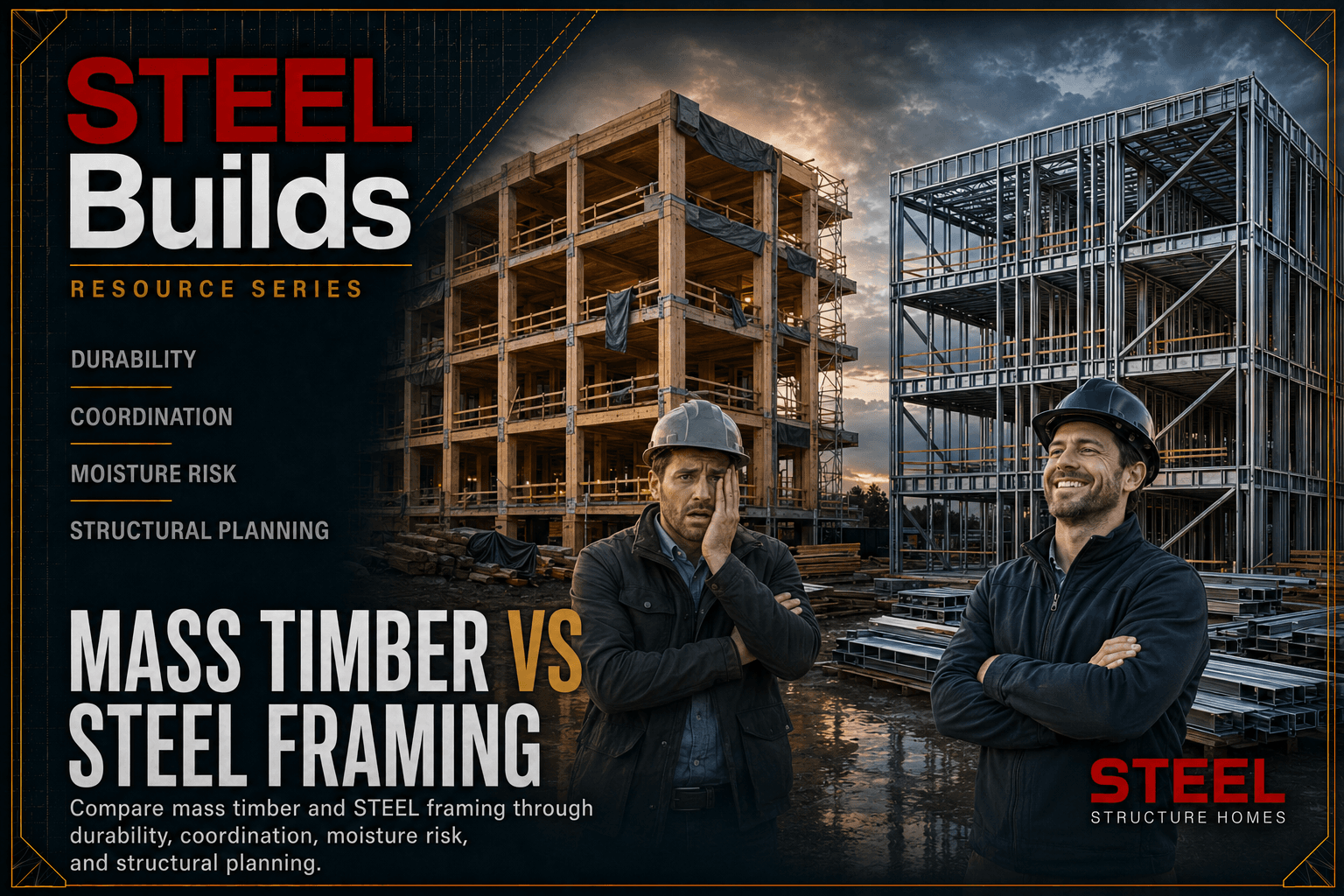
Mass timber and STEEL framing both deserve careful review. Each material has a place in modern construction, and each raises different questions around structure, moisture, fire design, sourcing, cost, and long term ownership.
For custom residential projects, the right comparison should be calm and specific. The goal is not to attack one material. The goal is to understand which structural path fits the site, design, and project team.
Mass timber needs the right conditions
Mass timber can create warm interiors and expressive structure. It also needs careful detailing around moisture, connections, fire design, sourcing, shipping, and local expertise. Those conditions may be appropriate for some projects and challenging for others.
A client should review whether the local team has the experience, equipment, and design support required for the material.
STEEL brings a different structural logic
Residential STEEL framing offers strength, dimensional stability, resistance to rot, and resistance to termites. It can support modern forms and precise coordination when the design and engineering are aligned early.
That does not mean STEEL is automatically the right answer for every home. It means STEEL should be evaluated as a serious structural system, especially when the project asks for durability, open space, or regional resilience.
Risk belongs in the comparison
Moisture, fire review, supply chain, labour familiarity, code path, cost, and installation sequencing can all affect the decision. A realistic comparison should include the full assembly and the local project team, not only material reputation.
For many clients, the practical question is which path can be coordinated with confidence.
Choose through review, not rhetoric
Use this article as a filter for better questions. Compare the site, the design, the available expertise, and the owner priorities. Then bring those questions into a Discovery Meeting so the project can be reviewed on its own facts.
A practical review path
Use this article as a working guide, not a final specification. A custom STEEL home depends on the site, the design goals, the project team, local code review, engineering input, and the owner decisions that shape scope. The strongest early work is to separate what is already known from what still needs review.
That is especially important for resilient custom homes. Climate exposure, soil conditions, access, local trades, structural spans, glazing, and envelope goals can all influence the right path. STEEL can be a strong structural choice, but it still belongs inside a complete design and delivery conversation.
Questions to prepare before you connect
- Where is the site and what regional conditions should be considered?
- Do you have drawings, sketches, model references, or a survey?
- What are the most important goals for durability, layout, views, budget, and timing?
- Who is already involved, such as an architect, builder, engineer, or advisor?
- Which questions need professional review before the project advances?
These questions help turn research into a useful first conversation. They also help the team decide whether the next step should focus on model selection, custom design review, regional conditions, technical coordination, or a broader budget discussion.
Where to continue your research
If the topic is structural comparison, continue into the STEEL Advantage page. If you are studying architectural fit, review the Designs page and bring one or two model references into the conversation. If your site has climate, terrain, or regional constraints, compare the relevant Markets page before the first meeting.
When you are ready to move from reading into action, use Start Your Project or Request Consultation. Bring your site context, your questions, and any available documents. The goal is a focused conversation that respects the design intent and identifies the review path before costly assumptions take hold.
What this article does not replace
This guide does not replace architectural work, engineering review, local code interpretation, pricing, or site specific professional advice. It gives you a cleaner way to prepare for those conversations. STEEL Structure Homes can help frame the early discussion, but the right path depends on qualified review and the actual conditions around the home.
Use the article to sharpen your questions. Use the consultation to test those questions against your site, your design goals, and the practical steps needed to move forward.
The useful next decision
After reading, decide what evidence you need before the project advances. That may be a model reference, a site review, a regional market discussion, a budget range, or a set of drawings for review. Clear inputs make the first conversation more productive and help the team avoid vague assumptions.
When those inputs are ready, move to the Connect pathway and choose the request type that matches your situation. A clear request helps the team respond with the right context, not a generic answer, and keeps the next step grounded in the actual home.