
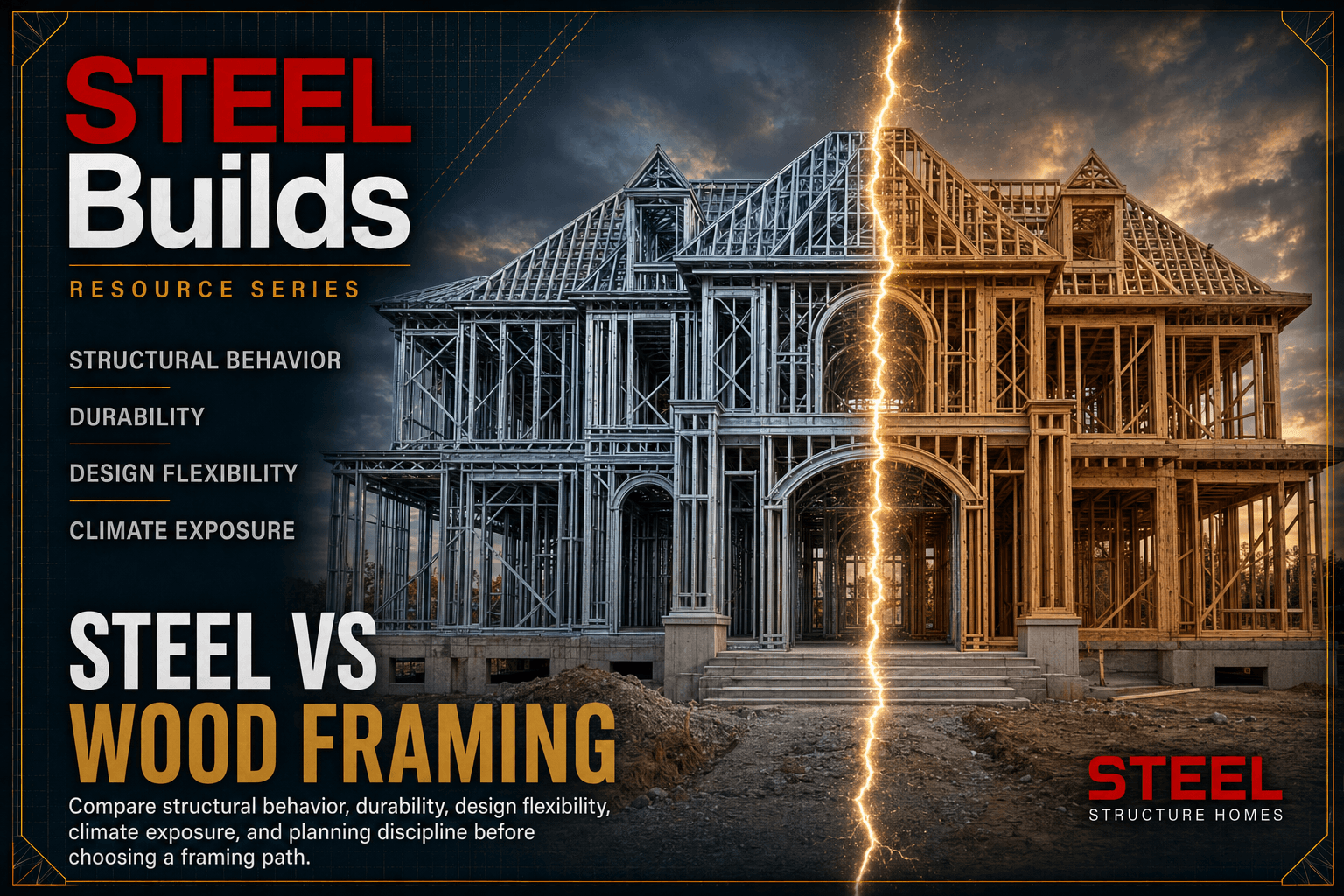
The frame decision deserves more than a quick comparison. Wood and STEEL are different structural paths with different strengths, constraints, and planning requirements. The right choice depends on the site, design goals, regional conditions, and the team responsible for the build.
For custom homes, STEEL vs wood framing is often less about tradition and more about what the project asks the structure to do.
Material behavior shapes the home
Wood is familiar, widely available, and supported by a large trade base. It can be an appropriate choice for many projects. It is also organic, moisture sensitive, and vulnerable to rot and termites when conditions are not controlled.
STEEL is different. It does not rot, does not feed termites, and offers dimensional stability. Those qualities can be valuable when the project involves long service life, tighter tolerances, modern forms, or demanding climates.
Design flexibility needs structure
Large openings, open interiors, strong roof forms, and heavy glazing can increase structural complexity. STEEL can support ambitious design goals when the architecture and engineering are coordinated early.
That does not mean STEEL removes complexity. It means the complexity can be studied through a structural system built for precision. The Designs page can help clients understand how model references begin that conversation.
Climate and site exposure matter
Coastal air, wildfire exposure, cold winters, humid regions, insects, and remote sites can all affect the framing decision. The Markets pages explain why regional context belongs in the first conversation. A home in Florida raises different questions than a home in British Columbia or Montana.
The frame is only one part of a complete assembly, but it is one of the earliest and most important decisions.
How to compare the options
- Compare the full scope, not only material cost.
- Review design goals before pricing assumptions harden.
- Include engineering, fabrication, delivery, and installation coordination.
- Consider durability, climate exposure, and maintenance expectations.
- Ask how each system affects the path from concept to permit review.
If you are weighing STEEL vs wood homes, start with the Advantage page, review common FAQ topics, and bring your site and design goals into a consultation.
A practical review path
Use this article as a working guide, not a final specification. A custom STEEL home depends on the site, the design goals, the project team, local code review, engineering input, and the owner decisions that shape scope. The strongest early work is to separate what is already known from what still needs review.
That is especially important for resilient custom homes. Climate exposure, soil conditions, access, local trades, structural spans, glazing, and envelope goals can all influence the right path. STEEL can be a strong structural choice, but it still belongs inside a complete design and delivery conversation.
Questions to prepare before you connect
- Where is the site and what regional conditions should be considered?
- Do you have drawings, sketches, model references, or a survey?
- What are the most important goals for durability, layout, views, budget, and timing?
- Who is already involved, such as an architect, builder, engineer, or advisor?
- Which questions need professional review before the project advances?
These questions help turn research into a useful first conversation. They also help the team decide whether the next step should focus on model selection, custom design review, regional conditions, technical coordination, or a broader budget discussion.
Where to continue your research
If the topic is structural comparison, continue into the STEEL Advantage page. If you are studying architectural fit, review the Designs page and bring one or two model references into the conversation. If your site has climate, terrain, or regional constraints, compare the relevant Markets page before the first meeting.
When you are ready to move from reading into action, use Start Your Project or Request Consultation. Bring your site context, your questions, and any available documents. The goal is a focused conversation that respects the design intent and identifies the review path before costly assumptions take hold.
What this article does not replace
This guide does not replace architectural work, engineering review, local code interpretation, pricing, or site specific professional advice. It gives you a cleaner way to prepare for those conversations. STEEL Structure Homes can help frame the early discussion, but the right path depends on qualified review and the actual conditions around the home.
Use the article to sharpen your questions. Use the consultation to test those questions against your site, your design goals, and the practical steps needed to move forward.
The useful next decision
After reading, decide what evidence you need before the project advances. That may be a model reference, a site review, a regional market discussion, a budget range, or a set of drawings for review. Clear inputs make the first conversation more productive and help the team avoid vague assumptions.
When those inputs are ready, move to the Connect pathway and choose the request type that matches your situation. A clear request helps the team respond with the right context, not a generic answer, and keeps the next step grounded in the actual home.